Что Вы ищете
?

Как выбрать линзу для систем машинного зрения роботов
Jun 26, 2026Поскольку робототехника продолжает преобразовывать производство, логистику, сборку электроники и автоматизацию складских операций, системы машинного зрения стали «глазами» современных роботов. Независимо от того, идентифицирует ли робот компоненты, находит ли продукцию на конвейере или проводит контроль качества, качество изображения напрямую влияет на точность работы.
Выбор правильного Линза роботизированного зрения Таким образом, речь идет не просто о выборе совместимого оптического компонента — речь идет об обеспечении стабильного и надежного изображения в реальных производственных условиях. Хорошо спроектированная линза помогает получать более четкие изображения, равномерное освещение и точное позиционирование, позволяя алгоритмам машинного зрения работать с максимальной эффективностью.
Для различных роботизированных задач требуются разные оптические характеристики, поэтому универсальной линзы для каждого проекта не существует. Перед выбором линзы инженерам следует оценить несколько важных факторов:
Для роботизированных систем контроля и автоматизации... высококачественная линза для роботизированной руки Система должна обеспечивать стабильное изображение с минимальными искажениями для повышения точности распознавания объектов и позиционирования. В приложениях, работающих круглосуточно, оптическая стабильность так же важна, как и разрешение изображения.
Многие передовые роботизированные системы теперь используют стереоскопическое зрение для улучшения восприятия глубины и трехмерного позиционирования. В таких приложениях выбор подходящей бинокулярной линзы для распознавания объектов на роботизированной руке имеет важное значение.
Система бинокулярного зрения основана на совместной работе двух камер для расчета глубины и пространственных соотношений. Даже небольшие различия в оптических характеристиках линз могут снизить точность измерений.
Для роботизированных манипуляторов, выполняющих точную сборку, операции захвата и перемещения или автоматизированный контроль, бинокулярные линзы распознавания должны обеспечивать:
Эти характеристики помогают улучшить расчет глубины и обеспечивают более надежное движение робота.
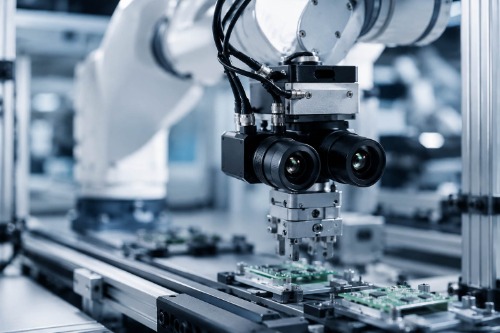
Системы машинного зрения для роботов используются во многих отраслях, включая промышленную автоматизацию, логистику, производство электроники, медицинские приборы и интеллектуальные складские системы. Поскольку каждое приложение имеет свои уникальные требования к визуализации, выбор объектива всегда должен основываться на реальных условиях работы, а не только на технических характеристиках.
Например, роботизированная рука, выполняющая проверку печатных плат, может отдавать приоритет разрешению изображения и контролю искажений, в то время как складскому роботу может потребоваться более широкое поле зрения для навигации и обнаружения объектов. Выбор подходящей линзы для системы машинного зрения робота или линзы для роботизированной руки в зависимости от конкретного применения помогает повысить эффективность системы, уменьшить ошибки распознавания и обеспечить долговременную стабильность работы.
Сотрудничество с опытной командой инженеров-оптиков также может сократить время разработки, обеспечив правильное соответствие объектива сенсору камеры и требованиям приложения.
В Оптика WintopМы понимаем, что каждый проект в области робототехнического зрения имеет свои уникальные задачи по обработке изображений. Помимо предоставления высококачественных оптических линз, мы предлагаем индивидуальные оптические решения, адаптированные к различным роботизированным приложениям, включая машинное зрение, роботизированные манипуляторы, камеры с искусственным интеллектом, автоматизацию складских операций и системы промышленного контроля.
Наша опытная команда инженеров оказывает поддержку клиентам на протяжении всего процесса разработки — от оптического проектирования и оценки прототипов до тестирования и серийного производства. Благодаря собственным исследованиям и разработкам, высокоточному производству, строгому контролю качества и оперативной технической поддержке мы помогаем клиентам снизить риски разработки и ускорить вывод продукции на рынок.
Если вам нужна надежная линза для роботизированного зрения, специализированная бинокулярная линза для распознавания объектов на роботизированной руке или высокопроизводительная линза для роботизированной руки, компания Wintop Optics готова поддержать ваш следующий проект.
Свяжитесь с компанией Wintop Optics сегодня, чтобы обсудить ваши требования к системе и узнать, как наш опыт в области оптики может помочь повысить производительность вашей системы машинного зрения для роботов.
Электронная почта: yorty@yuntal.com
Телефон/WhatsApp: +86 153 0268 9906
 Подпишитесь на наши информационные бюллетени
Тел. : Overseas contact Lina : 86 153-0268-9906
Overseas emial : yorty@yuntal.com
WhatsApp : +86 153-0268-9906
E1108, Jinbolong Building, Longhua, Shenzhen,Guangdong, China


Friendly Links :
whatsappАвторские права © 2026 WINTOP OPTICS CO., LTD.. Все права защищены .粤ICP备2025439823号-1
 IPv6 network supported.